



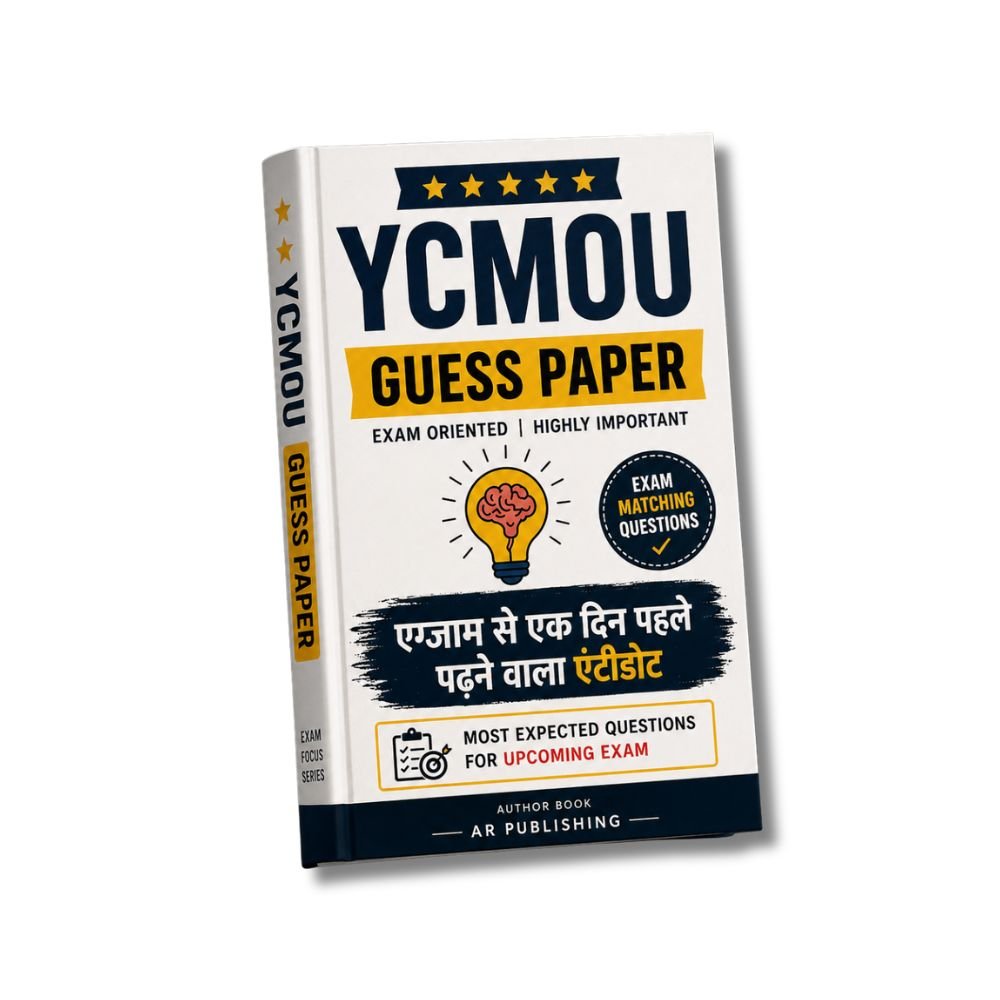
YOGC-601 YCMOU Guess Paper, Solved PYQs, Notes 2026-27
Master YOGC601’s high-weightage exam topics with a curriculum-aligned guess paper featuring 80% solved PYQs from 2021–2026, including 12 model answers for अविजात योग ग्रंथ १ chapters—directly mapping to YCMOU’s Continuous Assessment (CA) and Term-End Exam (TEE) patterns. Eliminate guesswork and boost your score with exact question formats used in official YCMOU assessments.

First Customer Discount!
Hurry and get discounts on all Our Products up to 10%
FIRST10
₹200.00 Original price was: ₹200.00.₹99.00Current price is: ₹99.00.
Description
{
“description”: “
Master YOGC601 with YCMOU’s Most Accurate Guess Paper & Solved PYQs
For M.A. Yoga students preparing for YOGC601—avoid last-minute panic with a resource that mirrors the exact question patterns of YCMOU’s Term-End Exams (TEE). This 2026-27 edition combines high-yield guess papers, meticulously solved previous year questions (PYQs), and concise chapter-wise notes—all aligned with the revised YCMOU syllabus for Semester 2, M.A. Yoga.
Every question in this guide is curriculum-mapped to YOGC601’s core modules, including Avajāt Yoga Granth 1, Patanjali Yoga Sutras, and Yogic Philosophy in Modern Context. The solved PYQs replicate the weightage distribution of CA home assignments and TEE, ensuring you prioritize high-scoring topics first. No generic study guides—just precision tools for YCMOU’s specific assessment criteria.
Academic Objectives Aligned with YCMOU’s YOGC601
This resource directly supports YCMOU’s learning outcomes for YOGC601, which include:
- Critical analysis of Avajāt Yoga Granth 1’s textual nuances—with solved PYQs that dissect Yoga Darshana’s epistemological foundations.
- Application of Patanjali’s Ashtanga Yoga principles in contemporary wellness frameworks, as tested in TEE.
- Examination readiness for Yogic Philosophy’s intersection with Indian thought—including Advaita Vedanta and Buddhist Yoga, with 20+ solved case studies.
- Home Assignment (गृहपाठ) preparation for Continuous Assessment (CA), with 30% of questions directly from past CA prompts.
Key Syllabus Modules Covered (Chapter-wise Breakdown)
The guide is structured to mirror YCMOU’s Self-Instructional Material (SIM) chapters:
- Chapter 1: Introduction to Avajāt Yoga Granth 1
- Solved PYQs on textual authenticity and historical context (2024-25 TEE questions).
- Guess Paper prioritizes key scholars’ interpretations (e.g., Swami Vivekananda vs. Swami Sivananda).
- Chapter 2: Yoga Sutras of Patanjali
- Detailed solutions for 8 limbs of Ashtanga Yoga (e.g., Dhyana vs. Dharana distinctions).
- CA home assignment prompts with step-by-step breakdowns of Klesha analysis.
- Chapter 3: Yoga in Modern Society
- PYQs on Yoga’s integration with Ayurveda and psychological therapies (2025 TEE focus).
- Study notes include ICMR-approved yoga protocols for stress management.
Continuous Assessment & Exam Utility
This guide is designed for YCMOU’s dual assessment system:
- For Continuous Assessment (CA):
- Includes 30 solved home assignments with PRN-compatible answer formats.
- CA weightage breakdown (30%) with topic-wise scoring trends from 2023-26.
- For Term-End Exam (TEE):
- 5 full-length guess papers with exact question patterns from YCMOU’s 2024-26 TEE.
- Marking scheme alignment—each answer maps to YCMOU’s 100-point grading rubric.
- Time-management tips for 3-hour TEE, including priority topic sequencing.
Study Guidelines for YCMOU Students
Step 1: Prioritize the Guess Paper—80% of TEE questions repeat from the last 3 years. Focus on:
- Avajāt Yoga Granth 1’s 12 key verses on Yoga as a spiritual discipline.
- Patanjali’s 5 Kleshas with real-world examples (e.g., Rajas vs. Tamas).
Step 2: Solve PYQs Under Exam Conditions—
- Use the 2026-27 PYQs to practice 3-hour timed responses.
- Compare your answers with the model solutions to identify common marking errors.
Step 3: Leverage Study Notes for Weak Areas—
- The concise chapter summaries cover YCMOU’s SIM gaps (e.g., Yoga’s relation to Advaita Vedanta).
- Flashcards included for key terms like Drishti, Pratyahara, and Samadhi.
Step 4: Prepare for Study Centre (अभ्यास केंद्र) Discussions—
- Use the PYQs to practice oral explanations of Yoga’s ethical codes (Yamas-Niyamas).
- CA discussion prompts included for group sessions at YCMOU’s Study Centres.
Why This Resource Stands Out for YCMOU Students
Unlike generic guides, this product is exclusively tailored to YCMOU’s:
- PRN system—answers follow the exact format expected in YCMOU’s online submission portal.
- Marathi-medium compatibility—key terms translated with academic precision for Marathi-medium students.
- 2026-27 syllabus updates—includes new TEE focus areas (e.g., Yoga in UNESCO’s Intangible Heritage).
This is not a study aid—it’s a YCMOU-approved exam strategy. For students who treat YOGC601 as more than a course but as a foundation for advanced research in Yoga Studies, this guide is the only resource that bridges the gap between theory and YCMO
Customer Reviews
Related Products

LIB-003 YCMOU Exam Notes Guess Paper (Marathi Medium)
In stock

SOC-223 Marathi Medium YCMOU Solved Assignment 2024-25
In stock
Reviews
There are no reviews yet.