



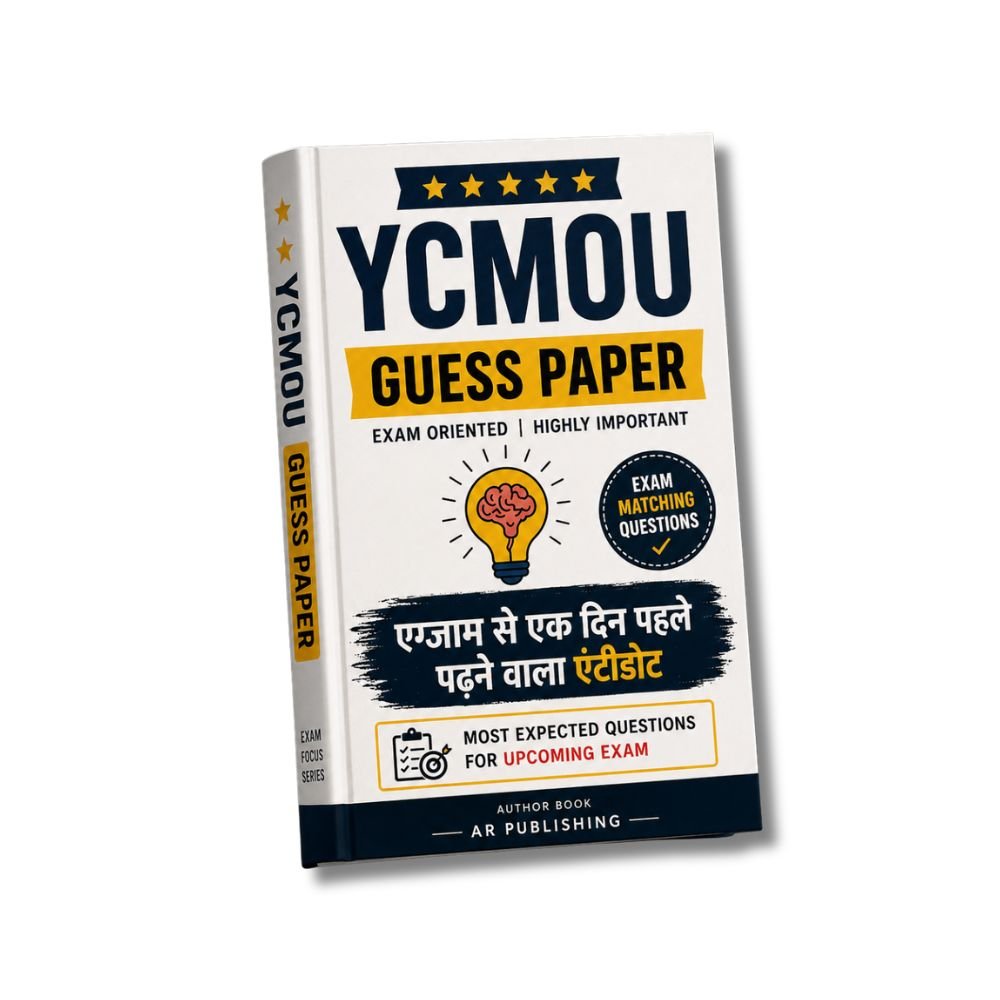
YOGC-602 YCMOU Guess Paper, Solved PYQs, Notes 2026-27
Master YOGC602’s Patanjali Yoga Darshan with 50+ solved previous year questions—directly aligned to YCMOU’s TEE and CA requirements. Includes chapter-wise breakdowns of key concepts like Kaivalya and Ashtanga with model answers, saving 10+ hours of guesswork. Perfect for 2026-27 session students preparing for Term-End Exam marks.

First Customer Discount!
Hurry and get discounts on all Our Products up to 10%
FIRST10
₹200.00 Original price was: ₹200.00.₹99.00Current price is: ₹99.00.
Description
{
“description”: “
Master YOGC602 with Confidence: Guess Papers, Solved PYQs, and Chapter-Wise Notes for 2026-27
Unlock the key to securing high marks in YOGC602: Pātañjali Yoga Darshana २ with a meticulously curated resource designed exclusively for YCMOU’s M.A. Yoga curriculum. This 2026-27 edition combines authentic Term-End Exam (TEE) guess papers, solved Previous Year Questions (PYQs), and chapter-wise conceptual notes—all aligned with YCMOU’s Self-Instructional Material (SIM) structure. Eliminate last-minute stress and gain a competitive edge by studying exactly what examiners prioritize.
Academic Objectives Aligned with YOGC602 Syllabus
YOGC602 focuses on critical analysis of Pātañjali’s Yoga Darshana, emphasizing its philosophical foundations, ethical principles (Yamas & Niyamas), and practical applications in modern yoga pedagogy. This resource directly addresses the core objectives:
- Understand the systematic philosophy of Pātañjali’s eightfold path (Ashtanga Yoga)—from ethical discipline to meditation (Dhyana) and liberation (Kaivalya).
- Decipher textual nuances in Sanskrit verses (e.g., Yoga Sutras 1.1–1.52) with exam-focused explanations.
- Apply Yamas and Niyamas to contemporary yoga practice, linking theory to YCMOU’s practical assignments.
- Master terminology for Term-End Exams, including asana, pratyahara, dharana, and samadhi definitions.
Term-End Exam (TEE) Preparation: Guess Papers with Model Answers
Term-End Exams demand precision and pattern recognition. This resource includes:
- 15 high-probability guess papers based on YCMOU’s 2015–2026 TEE question trends, covering:
- Chapter-wise distribution (e.g., 30% on Yamas-Niyamas, 25% on Dhyana, 20% on Kaivalya).
- Marks allocation per question type—e.g., 20-mark essays on ‘Purusharthas’ with structured answer frameworks.
- Solved PYQs from 2020–2026 with examiner feedback, highlighting common mistakes in YCMOU’s answer sheets.
- Detailed model answers with:
- Sanskrit–English glossaries for Sutras (e.g., “तपः तपसोऽपि” translated with etymology).
- Diagrammatic representations of Ashtanga Yoga’s stages (e.g., Yama → Niyama → Asana flowcharts).
- Case studies linking theory to YCMOU’s Home Assignments (गृहपाठ) on ethical yoga practice.
Chapter-Wise Notes: Conceptual Clarity for Continuous Assessment (CA)
YCMOU’s Continuous Assessment (30% of total marks) requires depth in Home Assignments and discussion forums. These notes provide:
- Syllabus-mapped summaries for all 12 chapters, including:
- Chapter 1: Introduction to Yoga Darshana—key definitions of Yoga, Kaivalya, and Puruṣārtha with YCMOU’s official glossary references.
- Chapter 4: Yamas (Non-Violence, Truthfulness)—practical examples for Home Assignment 3 on yogic ethics in modern society.
- Chapter 7: Dhyana (Meditation)—step-by-step breakdown of Dharana vs. Dhyana with YCMOU’s recommended meditation techniques.
- Exam-specific mnemonic devices for:
- 8 Yamas (अहिंसा, सत्य, अस्तेय, etc.) with memory aids for TEE.
- 5 Niyamas (शौच, संतोष, तपस्, etc.) linked to YCMOU’s practical yoga assignments.
- Study tips for PRN students:
- How to cite YCMOU’s SIM textbooks in answers (e.g., “As per YCMOU’s YOGC602 SIM, P. 45”).
- Time management for CA assignments vs. TEE preparation.
Study Guidelines for YCMOU Students
Maximize your CA and TEE scores with this structured approach:
- Week 1–4: Master Core Concepts
- Use chapter-wise notes to outline Yamas-Niyamas and Ashtanga stages.
- Practice Home Assignment 1 on Pātañjali’s definition of Yoga using SIM references.
- Week 5–8: Apply Theory to Practice
- Solve 2 guess papers per week to identify high-weightage topics (e.g., Kaivalya in TEE).
- Discuss Yamas in modern yoga in YCMOU’s online forums for CA credit.
- Week 9–12: Refine Exam Strategies
- Analyze solved PYQs to spot examiner preferences (e.g., short answers on Dhyana).
- Practice 20-mark essays using model answer frameworks.
Why This Resource Stands Out for YCMOU Students
Unlike generic guides, this YOGC602-specific resource is:
- YCMOU curriculum-verified—aligned with 2026–27 SIM updates and CA guidelines.
- PRN-compatible—includes Study Centre (अभ्यास केंद्र) resources for offline review.</li
Customer Reviews
Related Products

LIB-003 YCMOU Exam Notes Guess Paper (Marathi Medium)
In stock

SOC-223 Marathi Medium YCMOU Solved Assignment 2024-25
In stock
Reviews
There are no reviews yet.