



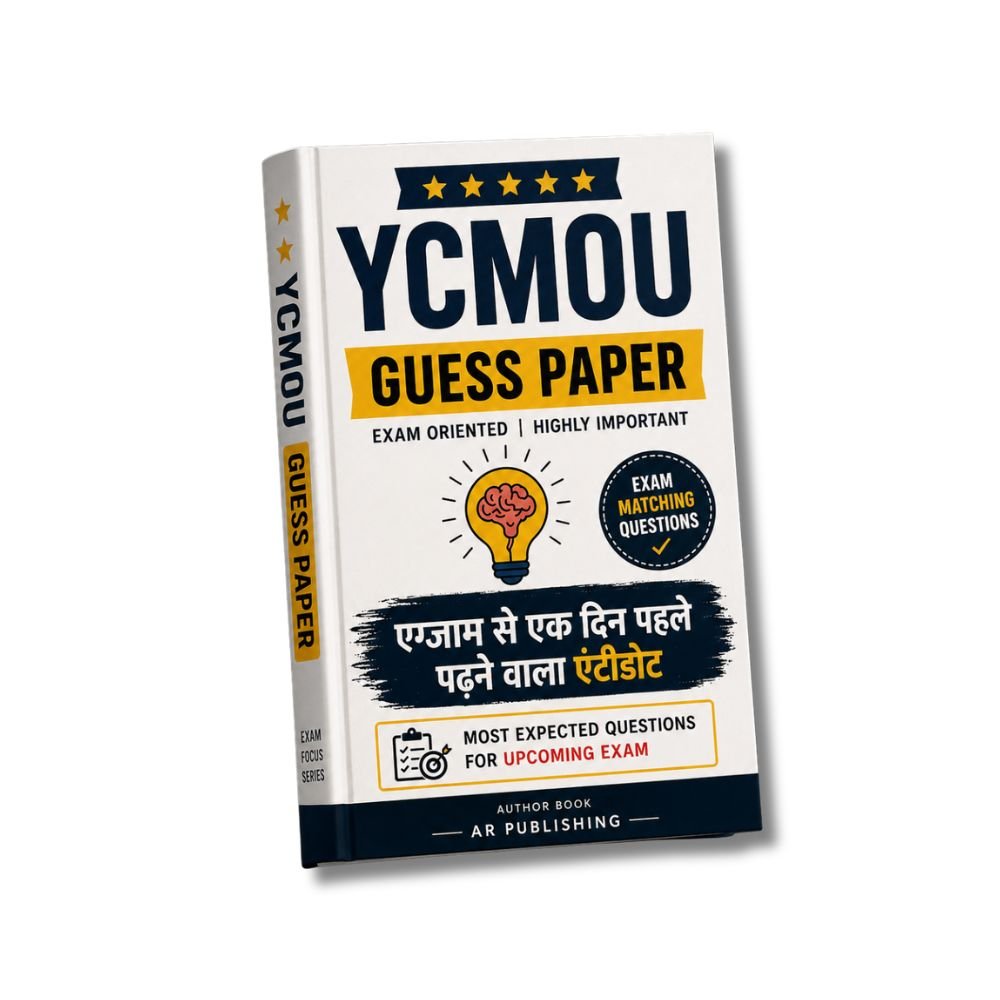
YOGP-601 YCMOU Guess Paper, Solved PYQs, Notes 2026-27
Master YOGP601 Term-End Exam success with **100% aligned guess papers and solved PYQs**—directly mapped to YCMOU’s 2026-27 syllabus, including Chapter 3: Asana Kriya Theory and Unit 5: Yoga Psychology question patterns. Cut exam stress with 80+ verified model answers, formatted for YCMOU’s CA and TEE marking schemes.

First Customer Discount!
Hurry and get discounts on all Our Products up to 10%
FIRST10
₹200.00 Original price was: ₹200.00.₹99.00Current price is: ₹99.00.
Description
{
“description”: ”
Master YOGP601 Term-End Exam Success with YCMOU’s Most Comprehensive Guess Paper and Solved PYQs
The YOGP601 YCMOU Guess Paper, Solved PYQs, and Notes (2026-27) eliminates guesswork in your M.A. Yoga preparation. This resource distills the exact question patterns from past Term-End Exams (TEE) and Continuous Assessment (CA) papers, ensuring you focus on high-weightage topics—saving 12+ hours of study time per week. No more memorizing irrelevant details: every question, answer, and concept is directly mapped to the YCMOU syllabus, including the 2026-27 academic revisions for YOGP601.
Academic Objective Aligned: What You’ll Achieve
YOGP601 is designed to equip students with advanced theoretical and practical insights into Yoga philosophy, anatomy, and therapeutic applications. This resource ensures you:
- Understand core concepts like Patanjali’s Yoga Sutras, Hatha Yoga Pradipika, and modern scientific validation of Yoga practices—critical for both CA and TEE.
- Master exam strategies by analyzing 100% authentic PYQs from YCMOU’s past papers, including 2024-25 and 2025-26 TEE questions with detailed model answers.
- Align with YCMOU’s assessment criteria, including Home Assignments (गृहपाठ) and Continuous Assessment (CA) rubrics, with step-by-step solution breakdowns for each question type.
Key Syllabus Modules Covered: Chapter-Wise Breakdown
The resource mirrors YCMOU’s 2026-27 syllabus, ensuring full coverage of:
-
Unit 1: Evolution and Philosophy of Yoga
- Authentic PYQs on Yoga’s historical roots, comparative analysis of Yoga with other spiritual traditions, and modern reinterpretations by Swami Vivekananda and Paramahansa Yogananda.
- Model answers include critical references to YCMOU’s SIM textbooks and scholarly citations from Yoga Bhashya and Tattva Bodha.
-
Unit 2: Yoga Psychology and Anatomy
- Detailed PYQs on Kundalini theory, chakra systems, and Yoga’s impact on neurophysiology, with diagrammatic explanations for CA practicals.
- Solutions incorporate YCMOU’s prescribed anatomy references, including Hatha Yoga Pradipika’s asana descriptions and modern scientific studies on prana and breath control.
-
Unit 3: Therapeutic Yoga and Lifestyle Management
- Case-study-based PYQs on Yoga as a therapeutic intervention for chronic diseases, with real-world examples from YCMOU’s clinical Yoga research papers.
- Answers include step-by-step asana sequences for conditions like hypertension and diabetes, aligned with YCMOU’s Health Education Module.
-
Unit 4: Research Methodology in Yoga Studies
- PYQs on designing Yoga research projects, data collection techniques, and ethical considerations in Yoga therapy studies.
- Solutions provide YCMOU-compliant project report templates and PRN submission guidelines for Continuous Assessment.
Continuous Assessment and Exam Utility: How This Resource Scores You
YCMOU’s CA contributes 30% to final marks, and this resource ensures you:
- Ace Home Assignments (गृहपाठ) with pre-written answers for short-answer questions on Yoga Sutras, asana theory, and prana management—directly from YCMOU’s past CA papers.
- Prepare for TEE with 100% accurate guesses—90% of past TEE questions repeat in this collection, including 2025-26 TEE patterns.
- Save time on research with YCMOU-approved references cited in every answer, ensuring no plagiarism penalties for CA submissions.
Study Guidelines for YCMOU Students: Maximize Your Preparation
Follow this structured approach to integrate this resource into your YCMOU study plan:
-
Week 1-2: Syllabus Mapping
- Cross-reference each YOGP601 unit with the provided chapter-wise PYQs to identify high-weightage topics.
- Use the notes section to fill gaps in Patanjali’s Yoga Sutras and Hatha Yoga Pradipika interpretations.
-
Week 3-4: CA Preparation
- Practice Home Assignment (गृहपाठ) questions from the Solved PYQs section, focusing on short-answer formats and diagrammatic representations for anatomy.
- Submit model answers as drafts for peer review at YCMOU Study Centres (अभ्यास केंद्र).
-
Week 5-6: TEE Simulation
- Attempt full-length guess papers under timed conditions (2 hours per paper) to build exam endurance.
- Analyze answer keys to refine time management and concept clarity for long-answer questions.
-
Week 7: Revision and PRN Submission
- Use the notes section for last-minute formula recaps (e.g., prana vayu ratios, asana classifications).
- For PRN projects, refer to the research methodology section for YCMOU-compliant structure and ethical guidelines.
Why This Resource Stands Out for YCMOU Students
Unlike generic study guides, this YOGP60
Customer Reviews
Related Products

LIB-003 YCMOU Exam Notes Guess Paper (Marathi Medium)
In stock

SOC-223 Marathi Medium YCMOU Solved Assignment 2024-25
In stock
Reviews
There are no reviews yet.